.png?width=240&height=72&name=Untitled%20design%20(22).png "Untitled design (22)")


By Luke Hutchinson on Sep 29, 2026, 11:00:02 AM
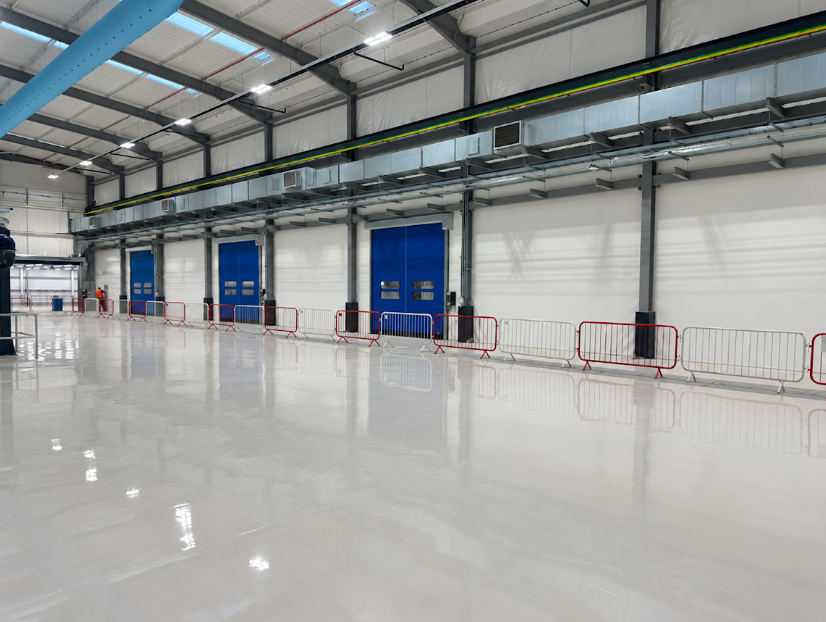
Warehouse environments can change regularly and rapidly, which means they need partitioning that adapts easily. But naturally, if it’s only a short-term change, you don’t always want to bear the capital cost and disruption of installing a permanent structure.

Treating a short-term requirement as if it were a permanent building project often means paying more, waiting longer and taking on construction work that was never really necessary. Knowing when a temporary warehouse partition is the better option, rather than defaulting straight to block or stud construction, can save real time and money on the right project.
When A Temporary Partition Makes Sense
Temporary partitions are a sensible option when a need has a defined end date, whether that is screening off building works, covering a short-term contract or managing seasonal capacity that will not be needed year-round. If you already know the partition will eventually come down, whether that is in three months or three years, building it as a permanent structure doesn’t usually make practical or financial sense.
Temporary warehouse partitions are designed around exactly this kind of defined, time-limited requirement. They give you the flexibility to be up and running quickly without undertaking major work, and to be dismantled just as easily once the project it was designed for is complete.
Fast To Install, Fast To Remove
Temporary partitions can be installed fast, sometimes within a matter of days, and come down just as quickly, without the cost, mess or downtime that block or stud construction involves. There is also usually no need for planning permission or building regulations involvement.
Hutchinson's own comparison of installation and removal costs shows that its tension wall systems tend to be lower cost than block or stud alternatives, largely because there is no wet trade work, no structural framework to build and no lengthy reinstatement process once the partition is no longer needed. For a site trying to keep production running during the works, this speed counts just as much as the cost saving.
Why Cost Scales Differently
Costs are different between the two approaches too. With a permanent structural framework, price climbs sharply with height, since taller partitions demand significantly more structural support and material.
A partition supported by the existing building structure, by contrast, stays roughly constant regardless of how tall it needs to be, since it is not carrying its own independent structural load in the same way. For warehouses and industrial units with high ceilings, this difference alone can make a temporary partition dramatically more cost-effective than a permanent equivalent.
Full Protection While The Partition Is In Place
Choosing a temporary system does not mean compromising on protection while it is up. These partitions still do the job properly in the interim, controlling dust, fumes, noise or temperature just as effectively as a longer-term solution, so a partition warehouse teams put up for a defined project genuinely performs for as long as it needs to. The word temporary describes how long the partition stays in place, not how well it functions while it is there.
Built To Adapt As Plans Change
If needs change later, whether the project extends, the layout shifts again, or requirements grow beyond what was first expected, a temporary system can typically be reconfigured, relocated or extended rather than replaced outright. This flexibility is one of the more underrated advantages of a temporary approach, since plans on an active industrial site rarely stay perfectly fixed from the moment work begins. A permanent structure offers no such option once it is built without significant cost and upheaval, whereas a temporary partition can move with the project.
Finding The Right Option For Your Project
If you are weighing up a temporary partition against a permanent build for an upcoming project, getting a clear comparison of cost, timescale and flexibility before committing helps make sure you choose the option that genuinely fits your situation.
Understanding Costs And Possibilities
Because the right choice depends so heavily on the specifics of a project, from expected duration to ceiling height to how likely the layout is to change, a generic idea of what’s possible doesn’t usually give operations managers enough to work out budget and specifics. Working with experts, learning the actual figures for your site, and comparing installation cost, removal cost, and expected lifespan against a permanent alternative tends to make the right choice far more obvious than it might first appear.
Request a quote to compare the options for your project and see whether a temporary warehouse partitions could work for your project.
No Comments Yet
Let us know what you think