.png?width=240&height=72&name=Untitled%20design%20(22).png "Untitled design (22)")


By Luke Hutchinson on Aug 18, 2026, 10:00:00 AM
Energy costs are no longer a background concern for UK manufacturers - they’re front and centre. Over the past few years, industrial energy prices have surged, with UK businesses facing some of the highest electricity costs in Europe.

According to government and industry data, wholesale energy prices rose sharply following 2021 and, while they’ve stabilised slightly, they remain significantly higher than pre-crisis levels. The Manufacturers’ Organisation has reported that industrial electricity prices are four times higher in the UK than in the US and 46% above the global average, putting them at a significant disadvantage.
For manufacturing businesses running large facilities, that represents a serious, ongoing cost pressure that directly impacts margins. And in many cases, a large portion of that cost is avoidable.
The Hidden Problem With Open-Plan Facilities
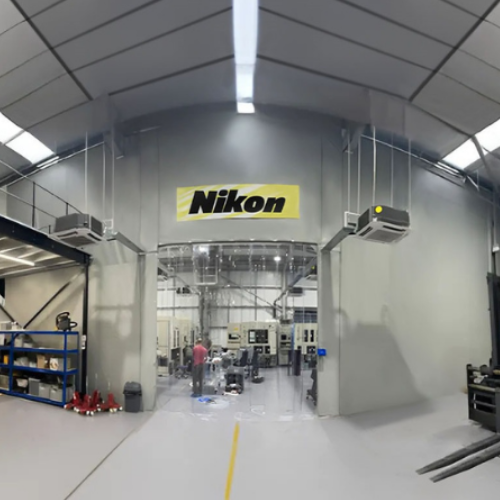
Most factories and warehouses are designed as large, open spaces. It makes sense from an operational perspective, but it comes with a major downside - you’re heating far more space than you actually need.
Warm air rises and disperses quickly in high-ceiling environments while heat escapes through loading bay doors, roller shutters and general movement throughout the facility. The result is a constant cycle of heating large volumes of air that don’t stay where they’re needed. It’s inefficient, expensive and increasingly difficult to justify in today’s energy climate.
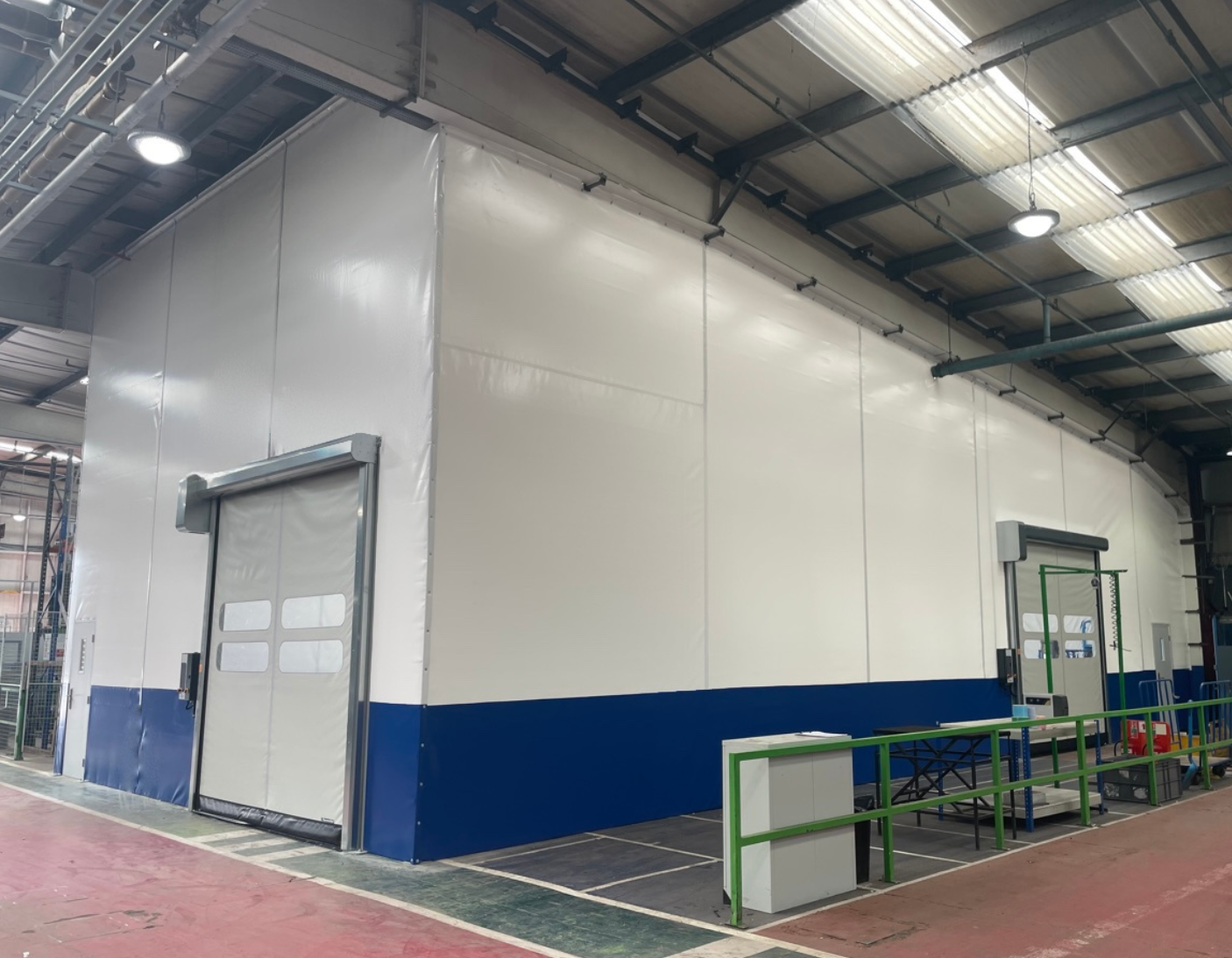
This is where warehouse partitions and Tension Wall systems can make a demonstrable difference, retaining heat in the areas where it’s actually needed.
Creating Controlled Thermal Zones
Rather than trying to heat an entire facility, partitioning allows you to create defined, controllable zones within your space. Production areas, packing zones, storage sections and dispatch areas can all be separated using flexible partition wall systems, reducing the volume of air that needs to be heated at any one time.
Consequently, heat is retained where it’s needed and temperature control becomes more consistent. Heating systems don’t have to work as hard to maintain comfortable working conditions and most importantly, you’re no longer wasting energy on empty or low-use areas.
Stopping Heat Loss Where It Matters Most
Common access points like loading bays, roller shutter doors and high-traffic openings are some of the biggest sources of energy loss in many factories. They allow warm air to escape constantly, particularly during busy periods. Every time a door opens, heated air is lost and cold air replaces it.
Partition systems help manage this by creating buffer zones. Instead of heat escaping directly from your main working area, it’s contained within a defined space. Even in facilities with frequent access, this significantly reduces overall heat loss and stabilises internal temperatures.
A Practical ROI That Makes Sense
When you’re looking at solutions to rising energy costs, the question is always the same - what’s the return? With partitioning, the answer is straightforward.
You have a one-off installation cost, followed by ongoing savings through reduced energy consumption. In many cases, businesses see a noticeable drop in heating costs almost immediately after installation.
Compared to structural building works, partition systems offer a much lower capital outlay and a far quicker return on investment. You’re not waiting years to see the benefit. You’re seeing it in your monthly energy bills.
Fast Installation Without Disruption
One of the reasons many businesses delay making changes to their facilities is the perceived disruption. Traditional construction projects can be time-consuming, expensive and difficult to manage around live operations.
However, partition systems can be installed quickly, often without shutting down production, and adapted to suit your existing layout. That means you can improve energy efficiency without impacting output or delivery schedules. For operations managers under pressure to maintain performance while reducing costs, it represents a distinct advantage.
Supporting Sustainability Goals
Reducing energy consumption isn’t just about cost, it’s also about sustainability. Lower energy usage means a smaller carbon footprint, which can help you demonstrate progress to clients and stakeholders when it comes to meeting environmental targets and is an important secondary benefit.
Partitioning offers a practical way to make measurable improvements without major structural changes or long lead times.
Why Hutchinson’s Approach Matters
Hutchinson’s designs, manufactures and installs its systems in-house, which means every project is tailored to the specific requirements of the site. From initial survey through to installation, the process is controlled, efficient and aligned with how your facility actually operates.
This is essential when you’re dealing with something as critical as energy efficiency because the right system doesn’t just divide space, it improves how that space performs.
Take Control Of Your Energy Costs
With energy prices still putting pressure on UK manufacturing, doing nothing is no longer a neutral option. If your facility is open plan, there’s a strong chance you’re spending more than you need to on heating.
Warehouse partitions and flexible partition wall systems offer a straightforward, high-impact way to reduce that cost without major construction or disruption.
Spending too much on heating your facility? Our Tension Wall and partition systems create energy-efficient zones that pay for themselves.
Contact us today for a no-obligation site survey.
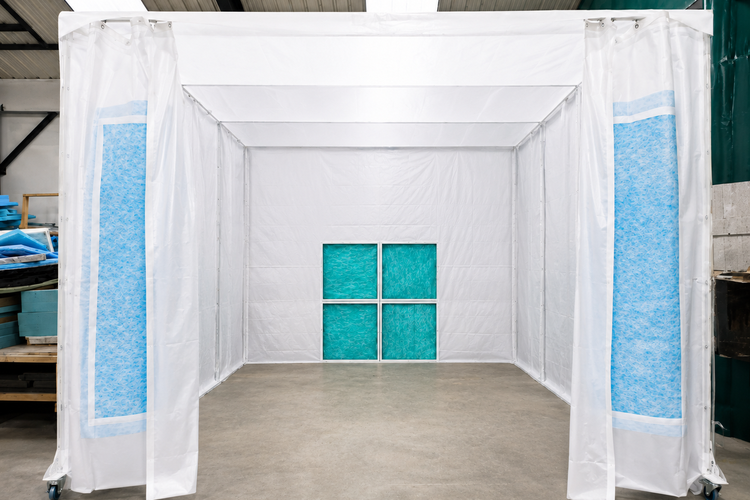
Case Study: Creating a Cleaner Joinery Workshop with a Retractable Spray Booth and Sliding Curtain
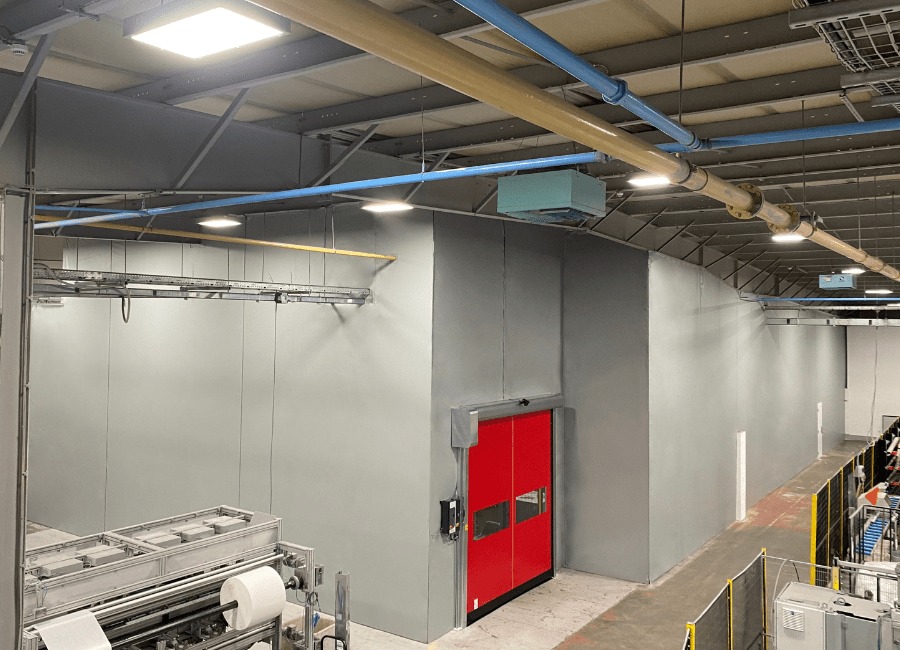
Cutting Temperature Control Costs with Factory & Warehouse Partitions
No Comments Yet
Let us know what you think