.png?width=240&height=72&name=Untitled%20design%20(22).png "Untitled design (22)")


By Luke Hutchinson on Feb 26, 2026, 12:00:00 PM
.png)
In manufacturing and warehousing, efficiency is everything. But you’d be surprised at how often a business, despite having plenty of space, is not functioning as well as it could. Optimising what’s available can be the difference between an organisation which survives and one which truly thrives.

For long-term success, businesses need operations which run smoothly, safely and cost-effectively. Yet many industrial environments face recurring challenges: inefficient use of space, cross-contamination, health and safety concerns and energy loss. These issues often creep in silently but can have dramatic effects on productivity, compliance and profitability.
One of the most effective ways to tackle these challenges is with industrial partition walls. By creating flexible or permanent divisions inside factories and warehouses, companies can gain better control over their environments.
Whether the goal is to isolate production areas, manage dust, reduce noise, contain allergens or regulate temperature, partitions provide a practical solution that optimises workflow and safeguards assets.
This guide explores how industrial partitions can make a demonstrable difference to operational efficiency in today’s workplaces. We’ll look at the most common triggers that lead companies to consider segregation, provide a comprehensive comparison of partition wall options and outline the key factors you must weigh up when selecting the right system.
Recognising the Need – Common Triggers and Challenges
Partitioning isn’t something businesses think of at the outset or when moving to new premises. It often only enters the conversation when they encounter specific operational pressures and need to find a solution fast. Below are the most common reasons and problems where you might require segregation.
Key Triggers For Considering Partition Walls
- New production cell or line expansion – As factories grow, segregating additional lines ensures efficiency without disrupting existing operations
- Health and safety audits – Auditors frequently highlight dust, fumes and hazard segregation needs as critical improvement areas
- Dust and temperature control – Equipment such as CNC machines or assembly bays may require controlled environments
- Customer project requirements – Some clients demand clearly defined zones for quality assurance or regulatory compliance
- Machinery damage or downtime – Contamination or poor segregation can lead to breakdowns, increasing costs and reducing uptime
- New premises or process changes – A fresh layout may necessitate dividing spaces for clarity and efficiency
- Improving workflow – Clear zoning supports lean manufacturing, reduces clashes and improves overall productivity
- Feedback from staff – Temperature discomfort, noise or dust issues are frequent drivers of change
- Energy-saving initiatives – Partitioning allows companies to retain heat in work zones or isolate chilled machinery areas, lowering bills
- Food sector requirements – Allergen containment, steam management and dust control around vats or belts are especially critical
Associated Frustrations and Problems
When segregation is ill-thought-out or lacking entirely, companies will experience a range of problems which can slow production, increase costs and result in non-compliance issues. These include:
- Operational disruptions – Plant shutdowns, cross-contamination of allergens or cleaning-in-place (CIP) process interruptions
- Financial strain – Delays, downtime and supplier failures causing missed project deadlines and higher costs
- Workflow inefficiencies – Production bottlenecks, poor layouts and ineffective ROI on previous investments
- Rising costs – Energy losses from heating or cooling vast, unsegregated spaces
- Health and safety risks – Dust, drafts and noise affecting staff wellbeing and productivity
- Tight margins and coordination pressures – Especially when balancing client requirements with limited time for installation
By recognising these triggers early on and preparing for them, managers can take proactive steps to prevent disruption rather than merely reacting to problems as they arise. This approach ensures segregation is planned according to operational needs ahead of time and helps secure long-term savings.
Exploring Solutions – Partition Types & Their Comparison
There is no single “right” type of partition wall. Instead, businesses should evaluate options based on durability, installation speed, hygiene requirements and overall cost-effectiveness. Partition usage varies widely between industries and within individual factories too, so what works for one business could be ineffective for another. Every situation should be considered on its own merits and unique challenges.
Hutchinson’s PVC Solutions
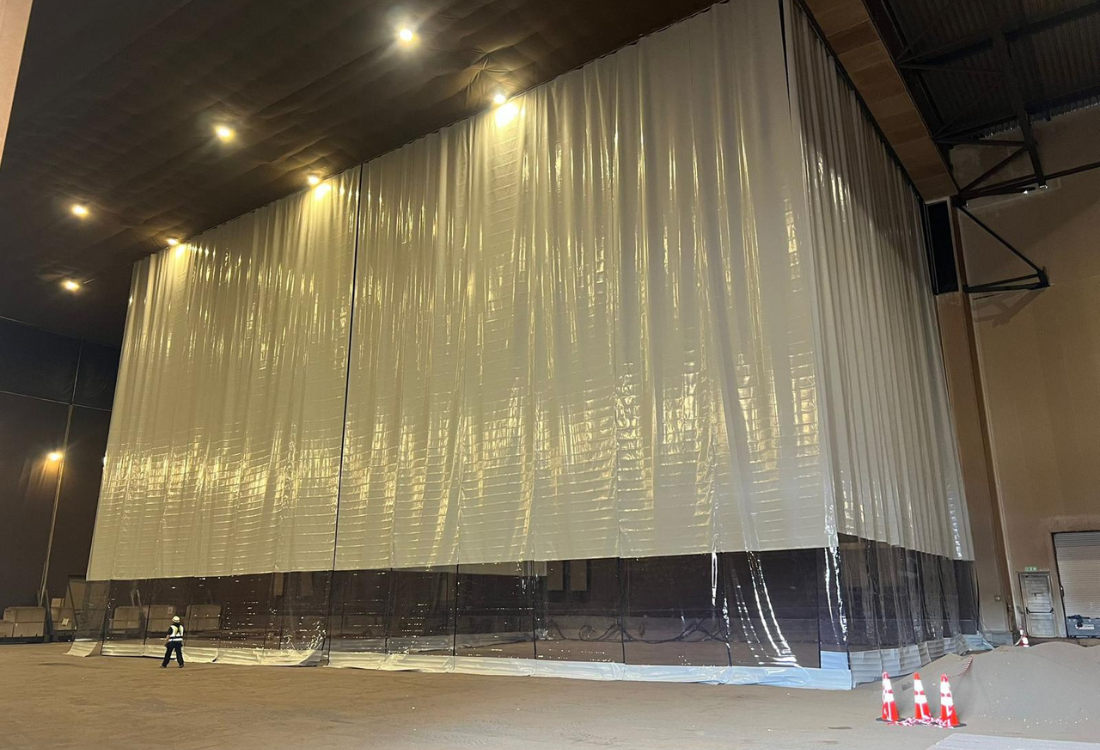
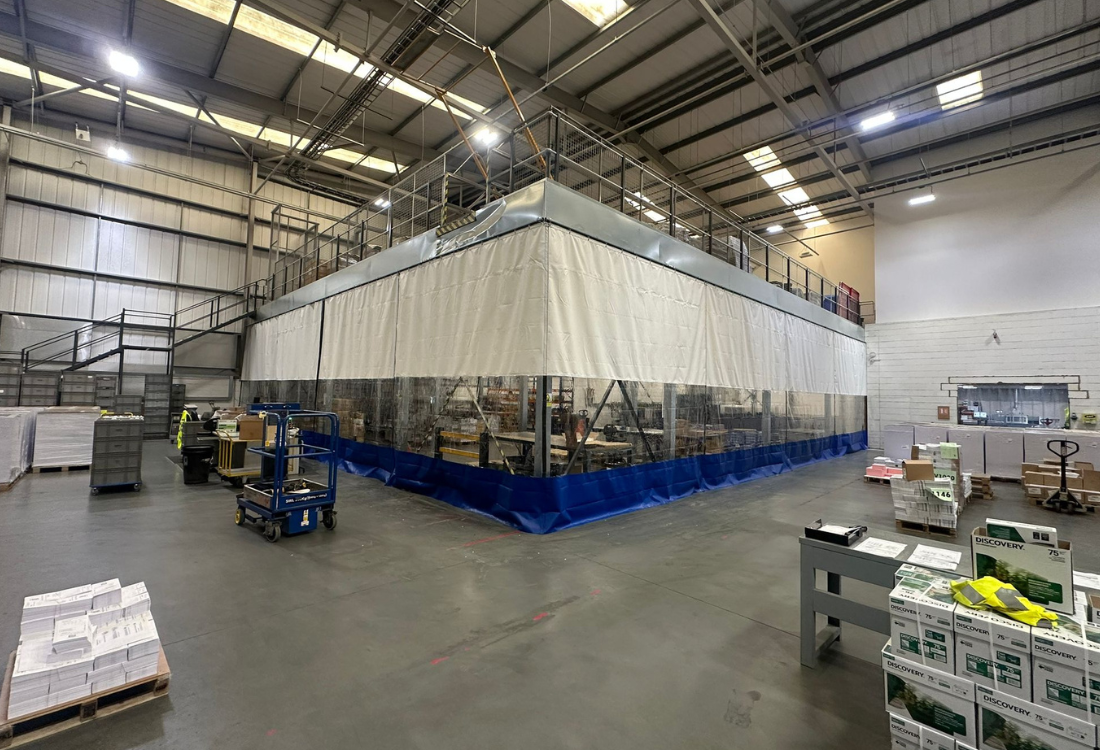
Hutchinson’s offers flexible PVC partition systems engineered for industrial and commercial environments. Our products include warehouse partitions, spray booth enclosures, welding curtains, clean room dividers and antibacterial food factory curtains.
We provide heavy duty, rip-proof, UV-stable and flame-retardant PVC curtains mounted on sliding tracks or catenary wires. Our curtains are manufactured in the UK in modular panels which allows them to be tailored to each site.
The Pros of Flexible Partitions
There are plenty of reasons a business might opt for flexible partitions over more permanent structures:
- Cost-effectiveness compared to permanent construction
- No need for fixed framing, saving space
- Clear vision panels improve safety and visibility
- Strong temperature and noise control
- UV stable and flame-retardant for compliance
- Durable with a 10 to 15-year lifespan when installed by Hutchinson’s
- Rapid installation ensures minimal downtime
- Modular and flexible - easily adapted as layouts evolve
- Hygienic, antibacterial options available for food production
- Compatible with extraction systems, lighting and other infrastructure
While there are lots of reasons to like flexible partitions, they’re not for everyone. Some stakeholders may prefer solid partitions for aesthetics or reassurance. They may also not meet very specific niche requirements. Additionally, external clients may question value if they don’t understand the technical benefits.
However, for the majority of businesses looking for efficient and cost-effective partitioning they offer a viable, fast-to-install and practical solution.
Other Partition Types – Pros and Cons
- Physical walls (brick, block, steel or stud walls): Physical walls provide a permanent way to separate production areas. They’re soundproof and long-lasting as well as incredibly strong. However, the cost to install is typically much higher than for flexible industrial curtains. It can also take much longer to implement and cause extensive disruption during the construction phase. Plus, it’s much harder to change things as business needs evolve – once you’ve erected permanent walls, you’re stuck with the layout you have without further expensive remodelling
- Temporary Strip Curtains: Temporary curtains are quick to install and a great choice for rapid, low-cost segregation. However, they have limited durability, suffer from poor containment of dust and temperature and are not suitable for critical applications
- Rigid steel or composite partitions: These types of partitions are strong, impact-resistant and often come in a modular form. However, they have a higher capital cost, installation is often lengthy and they’re less adaptable as business needs evolve
- Modular glazing systems: Modular glazing systems convey a professional finish and offer high visibility. They’re also highly durable. Just like rigid steel options they’re expensive to install, often have a longer install time and are less suitable for dusty or heavy-duty environments
- Tarpaulin or ad-hoc barriers: Tarpaulins are a quick and easy way to erect separate barriers in your factory. They’re also extremely cheap by comparison. But they’re not very effective if you need segregation in areas where cross contamination is an issue, for example in food production. They also don’t look professional and have a low lifespan.
Compared to these alternatives, Hutchinson’s PVC systems balance durability, hygiene and cost-effectiveness while delivering speed of installation and flexibility unmatched by rigid walls.
Making The Right Choice - Key Considerations
With so many options available, decision-makers must weigh several key factors before committing to a partition solution.
Operational Impact
- Installation time - A critical factor for busy plants where downtime is costly. Hutchinson’s systems are designed for rapid installation with minimal disruption
- Lead times - PVC partitions can be manufactured and installed faster than permanent walls
- Flexibility - As production layouts change, partitions can be adapted rather than rebuilt
Cost vs ROI
- Initial cost - PVC systems are significantly cheaper than brick or composite walls
- Value for money - They offer a 10 to 15-year lifespan, ensuring long-term ROI
- Energy savings - By retaining heat in working zones or isolating chilled equipment, businesses see measurable reductions in utility bills
- Throughput gains - Minimising contamination, drafts and bottlenecks drives productivity and increases OEE (Overall Equipment Effectiveness)
Safety and Environment
- Regulatory compliance - Hutchinson’s PVC is flame retardant, antibacterial (where required) and fully documented with RAMS (Risk Assessments & Method Statements)
- Professional environment - Clean, transparent panels promote a safe, orderly workplace
- Staff wellbeing - Reduced dust, noise and temperature fluctuations improve morale and retention
Common Buyer Questions
If you’re considering partitioning for your operations, you no doubt have questions about what’s involved. These are the most common ones we’ve answered here:
- How long does installation take? Typically, a fraction of the time required for rigid walls. Your installation can be done in a matter of days rather than weeks rather or months
- Will production downtime be necessary? Partition installations require minimal downtime unlike fixed structures which often require full and lengthy shutdowns
- Are they flame retardant? Yes, they meet stringent UK safety standards
- Are anti-bacterial options available? Yes, making them ideal for food manufacturing scenarios
- How long will they last? Around 10 to 15 years with professional installation
- Can they integrate with extraction and lighting? Yes, they’re designed for compatibility with your existing systems
- Do Hutchinson’s provide health & safety documentation? Yes, RAMS are provided for every installation
These considerations highlight why Hutchinson’s PVC solutions are often the most practical and future-proof choice.
PVC Partitions: The Future of Ultra-Efficient Operations
Segregating industrial workspaces is about more than mere practicalities of day-to-day operations, it’s a strategic investment in productivity, safety and compliance. From controlling dust and temperature to preventing costly downtime, the right partition system can transform your workflow.
While many options exist, Hutchinson’s PVC partition walls strike the perfect balance between cost, durability, flexibility and hygiene.
With UK-manufactured materials, nationwide installation and decades of expertise, Hutchinson’s stands as a trusted partner for companies across manufacturing, warehousing and food production.
Ready to optimise your industrial space? Contact Hutchinson’s PVC Solutions today for a tailored consultation and discover how our advanced partition systems can transform your operations.
Tel: 01246 948670
Email: sales@factorydividers.co.uk
Web: www.hutchinsons-pvc-solutions.co.uk
Why a Manufacturer-Installer Matters for Warehouse Partitioning Systems
Warehouse Partitions Installed In Days With Minimal Disruption
No Comments Yet
Let us know what you think