.png?width=240&height=72&name=Untitled%20design%20(22).png "Untitled design (22)")


By Luke Hutchinson on Mar 4, 2026 12:00:00 PM
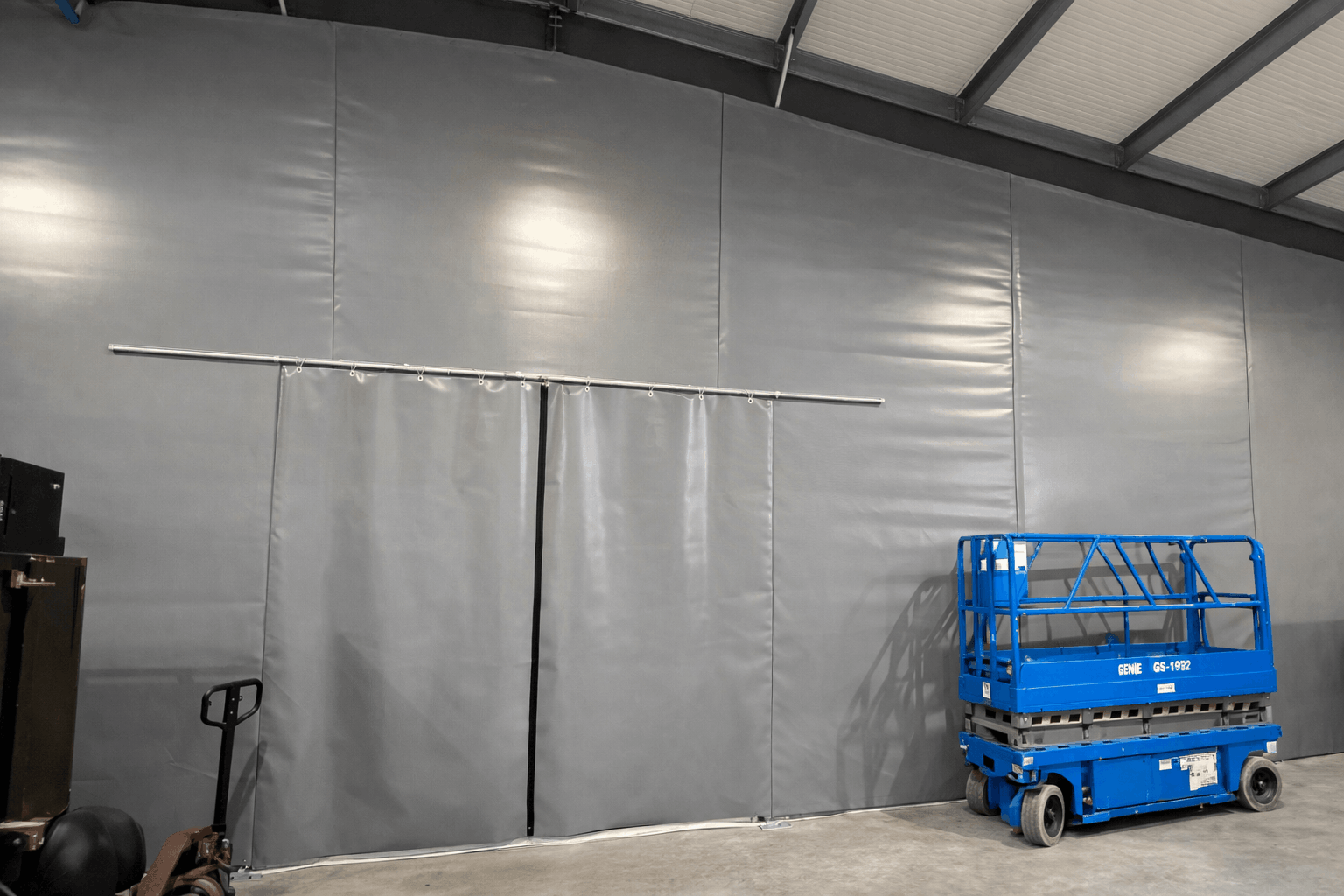
If you’re responsible for specifying partitioning systems in a large industrial or manufacturing facility, you will have noticed one thing very quickly: the terminology is not always clear.

Terms such as tension wall, flexi-wall, flexiwall, Durascreen, PVC partition, factory partitions and flexible partition wall are often used interchangeably, sometimes to describe genuinely different systems and sometimes to describe exactly the same type of system under a different brand name.
This lack of clarity can make it difficult to compare suppliers or confidently specify the right solution for your site. Understanding what sits behind the terminology is the first step toward making an informed decision.
Why the Language Around Flexible Partitions Gets Confusing?
The industrial partitioning sector has grown rapidly as manufacturers look for alternatives to permanent construction. As a result, many suppliers have introduced their own branded terms for flexible partition wall systems.
In practice, most of these solutions fall into the same core category: suspended PVC partition systems designed to divide space, control environments and create defined operational zones without structural changes.
The key differences are rarely in the name. They lie in:
-
How the system is engineered?
-
Whether it is manufactured or resold?
-
How well it is adapted to your specific facility?
If you are managing a large site, these differences matter and it pays to understand them.
What a Tension Wall System Actually Is?
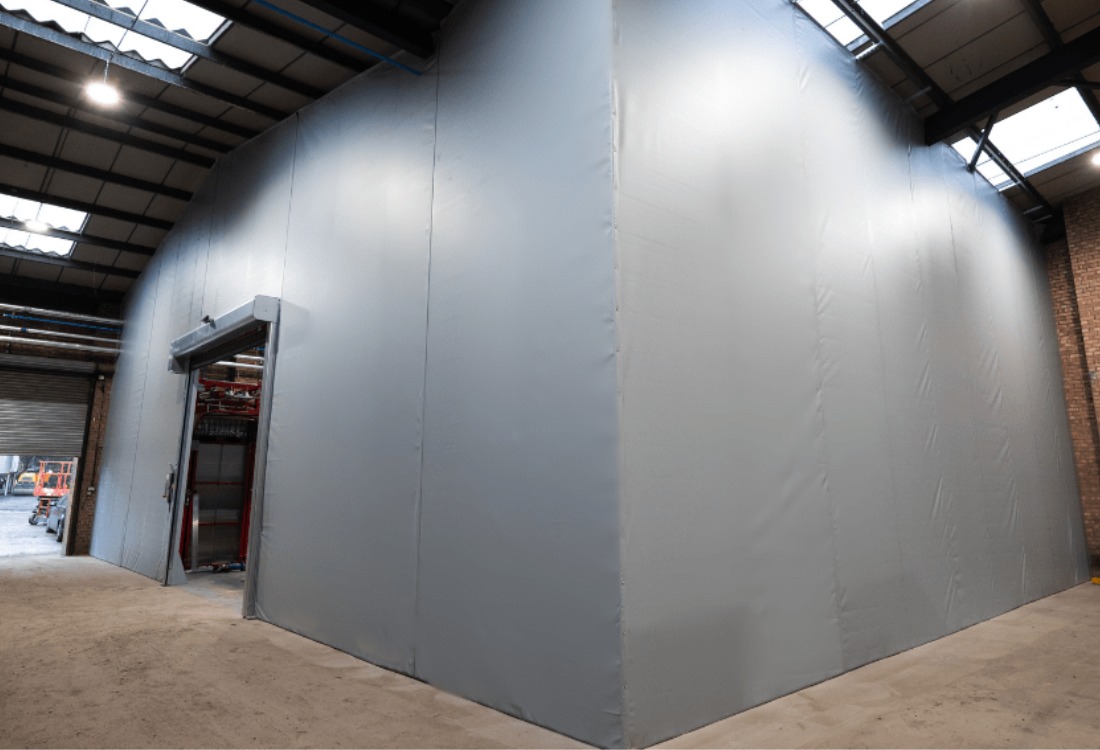
A tension wall is a type of flexible partition system that is suspended from the building’s roof structure, usually steel beams or purlins, with PVC panels extending down to floor level.
The panels are:
-
Flame retardant
-
Manufactured to exact site dimensions
-
Tensioned & fixed to the ground to create a stable seal
This design allows you to create large, enclosed areas without the need for permanent structural changes. It is particularly effective where you need full-height segregation but want to avoid disruption or irreversible changes.
Because the system is tensioned rather than rigidly fixed, it can accommodate slight building movement and uneven floor levels which is a common issue in large industrial facilities.
Flexi-Walls, Flexible Partitions, And Other Similar Branded Systems
Many suppliers use alternative terms such as flexi-wall, Durascreen or flexible partition wall to describe systems that operate on the same principle.
In many cases the supplier is rebranding a third-party product and acting solely as an installer. Or as some might say, a middle man.
From your perspective, the critical question is not what the system is called, but:
-
Who designs it?
-
Who manufactures it?
-
Who stands behind it if something needs changing or resolving?
For large-scale projects, this distinction directly affects lead times, quality assurance and accountability. By working with a manufacturer/installer like Hutchinson’s you gain far greater accountability and control over the variables.
How These Systems Work In Real Facilities?
Flexible partition systems are widely used in large manufacturing and industrial environments to solve practical operational challenges. Common applications include:
-
Dust and contamination control between production areas
-
Temperature zoning to improve energy efficiency or process stability
-
Noise reduction between adjacent operations
-
Spray booths and paint areas requiring enclosed environments
-
Hygiene or allergen segregation in food production facilities
Because the systems are manufactured to size, the large partition walls can be configured into complex layouts, including L-shaped and U-shaped enclosures, to fit around machinery, columns and access routes.
You are not constrained to standard panel sizes or simple rectangular layouts.
Integrated Features That Matter At Scale
In larger facilities, partitioning systems often need to do more than simply divide space. Modern tension wall and flexible partition systems can incorporate a range of integrated features, including:
-
Clear vision panels to maintain natural light and visibility
-
Strip curtain doorways for pedestrian access
-
High-speed doors for vehicles or equipment
-
Custom cut-outs for services, extraction systems or conveyors
These features are typically far easier to implement when the system is designed and manufactured in-house, rather than adapted from a standard product range.
Questions You Should Ask Before Specifying a System
If you are comparing suppliers, asking the right questions early can save significant time and cost later.
Key considerations include:
-
Do they manufacture the system themselves, or resell a third-party product?
-
Can they provide a site survey and bespoke design?
-
What experience do they have with large, complex installations?
-
Who provides the warranty? The installer or the manufacturer?
-
Can the system be reconfigured or relocated if your layout changes?
If you operate in a larger organisation, these factors are often more important than the headline product name.
Flexibility Without Compromising Control
One of the primary advantages of tension wall and flexible partition systems is their adaptability. Unlike permanent construction, they can be:
-
Installed quickly
-
Modified as operational needs change
-
Removed or relocated without sunk construction costs
This makes them particularly well suited to facilities where production lines evolve, volumes fluctuate, or processes are regularly reviewed. At the same time, when properly engineered and installed, these systems provide robust environmental control that meets the demands of high-value manufacturing.
Making The Right Choice For Your Facility
If you are specifying partitioning for a large site, the goal is not simply to choose a product, it is to choose a solution and a partner that aligns with your operational priorities.
Understanding the terminology helps, but understanding who is behind the system matters more. Manufacturer-led solutions, such as those offered by Hutchinson’s, generally offer greater control, faster response and more consistent results, particularly as project size and complexity increase.
Not sure which solution fits your facility? Our team can assess your requirements and explain your options. Get in touch today for expert advice and guidance on choosing the right option for your requirements.
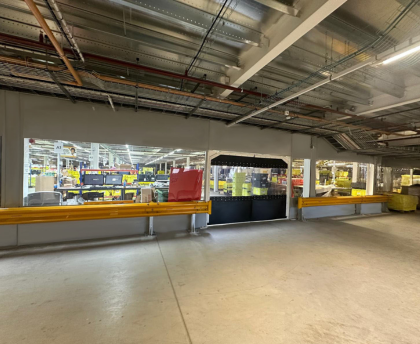
How Warehouse Partitioning Systems Transform Large Manufacturing Facilities
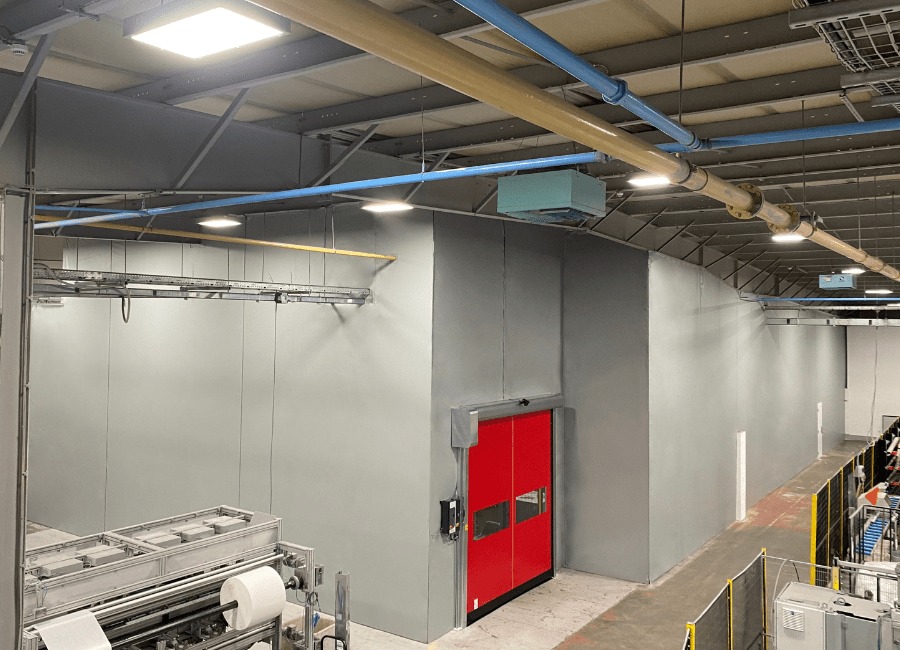
Cutting Temperature Control Costs with Factory & Warehouse Partitions
No Comments Yet
Let us know what you think