.png?width=240&height=72&name=Untitled%20design%20(22).png "Untitled design (22)")


By Luke Hutchinson on Dec 22, 2025, 10:00:00 AM
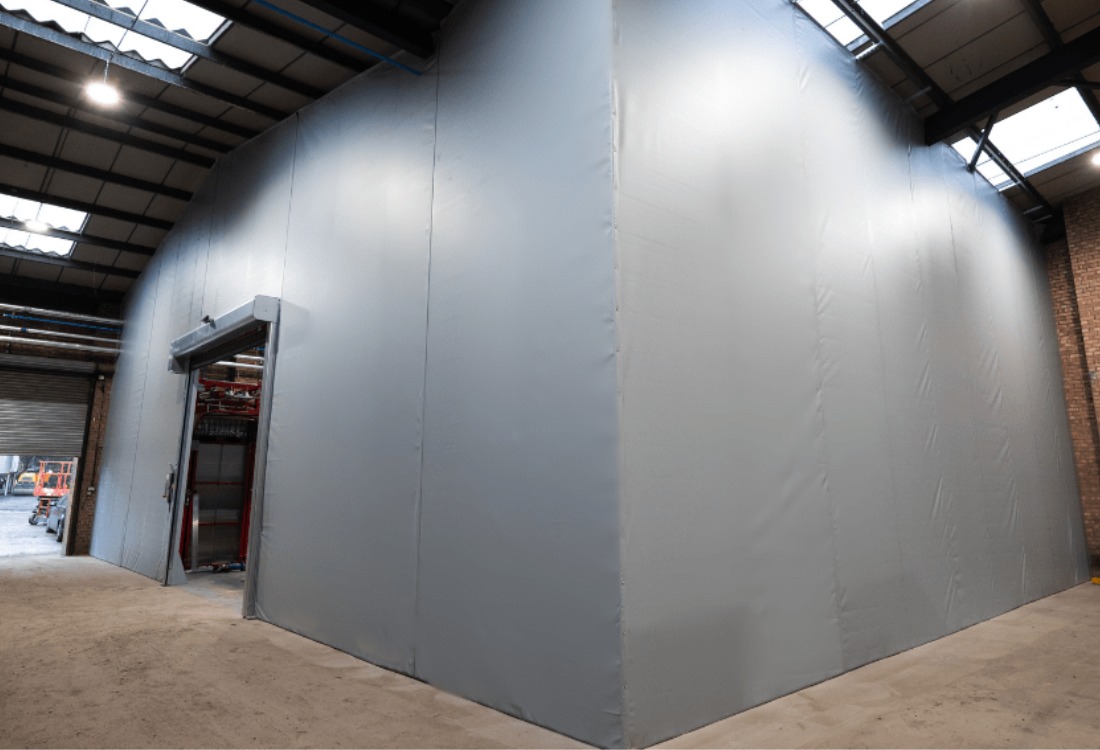
New contracts bring fresh product lines, seasonal peaks require additional capacity, and process improvements drive continuous layout optimisation. While some manufacturers maintain stable production lines, the majority face regular changes driven by evolving trends, technology and customer demands.
Traditional factory design relies on rigid, permanent structures that require lengthy construction periods and cause significant operational disruption. For many operations, these changes expose the limitations of this approach.
That's where flexible partition wall systems make a real difference. Designed to be installed quickly with minimal downtime, they are increasingly used in modern offices and production environments to create or reconfigure spaces.
These systems show how movable walls can maximize space flexibility by transforming large, open areas into multiple functional zones, enhancing adaptability and efficient space utilization without the extended lead times and disruption associated with traditional fixed walls.

Types of Partition Wall Systems
There is a wide range of partition wall systems available, each offering unique features to suit different office environments.
- Movable walls are designed for maximum flexibility, allowing businesses to reconfigure spaces quickly to accommodate changing team sizes or new projects.
- Demountable partitions provide a more permanent division but can still be removed or repositioned as business needs change, offering a cost-effective solution for long-term flexibility.
- Acoustic partitions are specifically engineered for sound control, making them ideal for creating quiet zones or private meeting rooms within open plan offices.
- Glass partitions combine modern design with functionality, allowing natural light to flow through the space while maintaining necessary separation between adjacent spaces.
- Sliding folding partitions are perfect for dividing large rooms into smaller, dedicated spaces, and can be stacked neatly away when not in use.
By selecting the right partition wall system, businesses can create office spaces that are both functional and aesthetically appealing, ensuring optimal space utilisation and adaptability.
The Triggers for Office Layout Changes
Production layouts typically change for several key reasons:
- New contracts or product introductions demand dedicated production cells.
- Equipment upgrades or machinery relocations require altered workflow paths.
- Capacity expansions respond to growing demand.
- Lean manufacturing initiatives focus on efficiency and waste reduction.
Whatever the driver, minimising disruption and controlling costs are vital. Traditional approaches can halt production for weeks, directly impacting output and profitability.
The Problem With Traditional Construction
Permanent walls built using traditional methods can take four to eight weeks of planning, contractor coordination, and health-and-safety approvals. The associated downtime, building work, and cost can turn even a modest layout change into a major capital project requiring significant production shutdowns.
Beyond the financial impact, lengthy construction timelines make it more difficult for manufacturers to respond quickly to new opportunities or operational requirements. When market conditions demand rapid action, waiting weeks for traditional building work represents a genuine competitive disadvantage.
A Faster, More Cost-Effective Approach
Flexible partition wall systems offer a fundamentally different approach to creating permanent production zones. They deliver the same functional benefits as traditional walls while significantly reducing installation time and operational disruption.
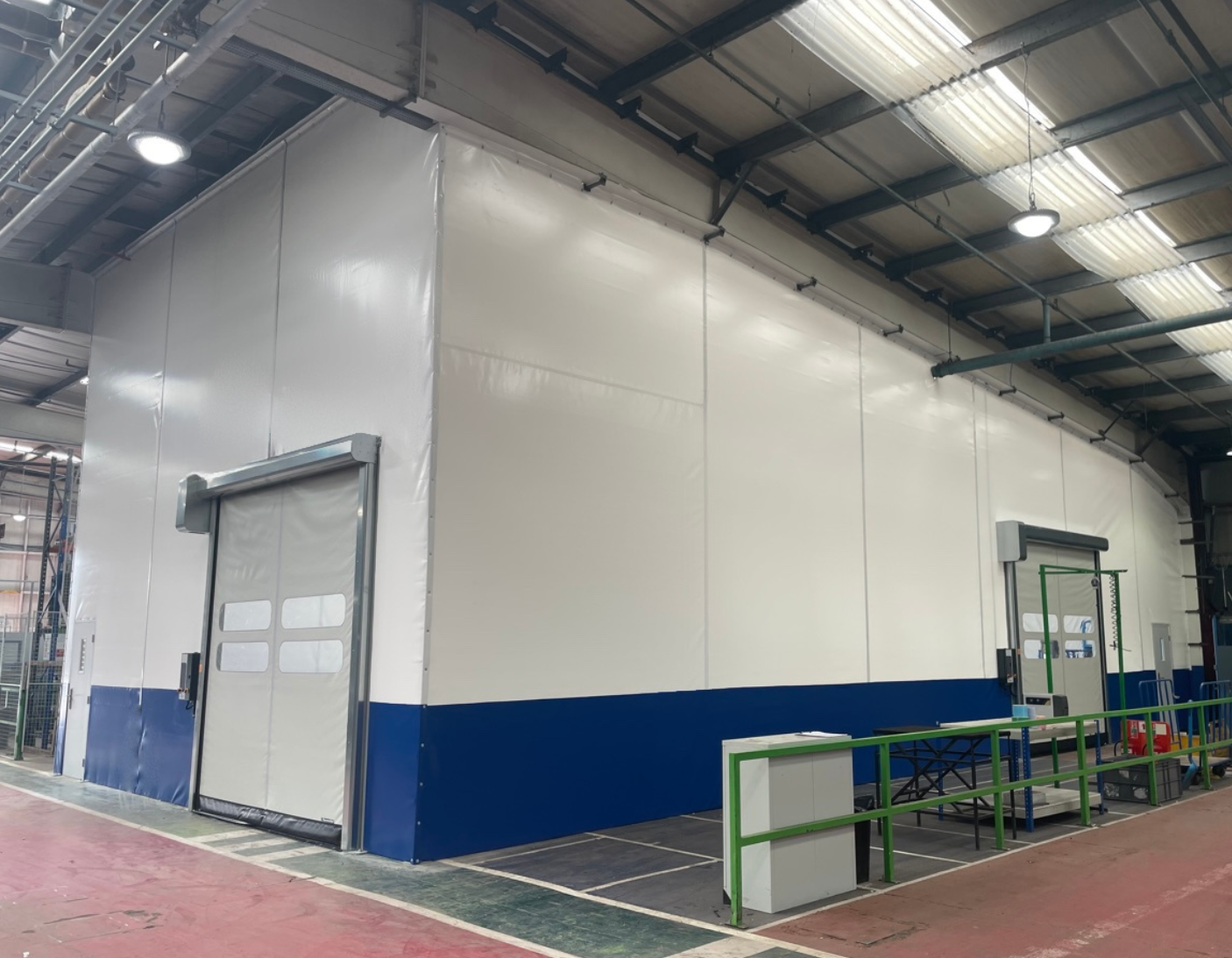
- Built using durable materials such as reinforced PVC, these systems provide robust, long-lasting partitioning that can be installed within days.
- They're fast to install and cost-effective, without compromising on performance or longevity.
- When operational needs change, these systems can be reconfigured without the extended downtime and high costs associated with modifying traditional structures. This adaptability protects your investment while maintaining the permanent segregation your operations require.
- Installation typically takes days rather than weeks, often completed over a weekend or during planned maintenance windows. This speed minimises impact on production schedules while delivering permanent, robust partitioning solutions.
Real-World Applications
The efficiency of these systems has proven valuable across diverse manufacturing environments where permanent segregation is essential.
ADE Power
When ADE Power needed a spray booth capable of housing full-size shipping containers, traditional permanent structures would have cost millions and required lengthy construction.
Instead, a 60-metre flexible partition system was installed quickly, creating a fully enclosed, permanent spray booth that continues to meet their operational requirements while offering functional flexibility when needed.
Harrison Spinks
Harrison Spinks required a permanent solution to contain soap residue and dust following process changes. A 40-metre flexible partition wall provided complete, long-term isolation.
The installation was completed in a fraction of the time traditional construction would have required, ensuring minimal disruption while delivering a permanent solution.
Nikon
Nikon's facility needed permanent partitioning to control temperature and dust around sensitive microchip testing equipment.
Flexible partition systems delivered a fully sealed, permanent zone quickly and cost-effectively, maintaining stable environmental conditions without the extended downtime of traditional building work.
Summary
These examples demonstrate how flexible partitioning systems support evolving production needs by maximizing the use of large rooms, optimizing every square metre, and providing solutions for noise control, safety, and environmental management. Folding partition walls can also be customized with unique designs or branding, allowing businesses to reflect their identity and enhance the aesthetic of their workspace.
Supporting Lean Manufacturing Principles
Lean manufacturing principles emphasise waste reduction, improved flow and responsive operational design. Flexible partition systems support this approach by enabling businesses to implement layout changes efficiently without the waste associated with lengthy construction periods.
They support
- Visual management by clearly defining work zones and production cells.
- Rapid implementation of 5S initiatives by creating dedicated spaces for specific activities.
- Kaizen improvements by allowing layout modifications to be completed during planned downtime.
Rather than requiring facilities to undergo lengthy construction projects, these systems enable continuous improvement through efficient, cost-effective implementation.
Protecting Capital Investment
The modern manufacturing environment demands responsive operational design. As supply chains diversify and product cycles get shorter, the ability to adapt facilities quickly has become a competitive advantage.
By investing in flexible partition wall systems, you're choosing a permanent partitioning solution that can be installed faster and more cost-effectively than traditional construction. If your needs change later on, the system can also be modified quickly, helping protect your investment over the long term.
This approach delivers measurable returns. Faster installation means lower project costs and quicker implementation. Unlike traditional fixed walls that require demolition, demountable partitions can be reconfigured with far less disruption. Reducing downtime from weeks to days has a direct impact on operational efficiency and profitability.
In sectors where responsiveness defines competitive advantage, the ability to install permanent partitioning quickly without extended shutdowns ensures that facilities can keep up with business requirements.
Discover how flexible partition systems can deliver permanent solutions for your facility faster and more cost-effectively than traditional construction. Contact us today to discuss your requirements.
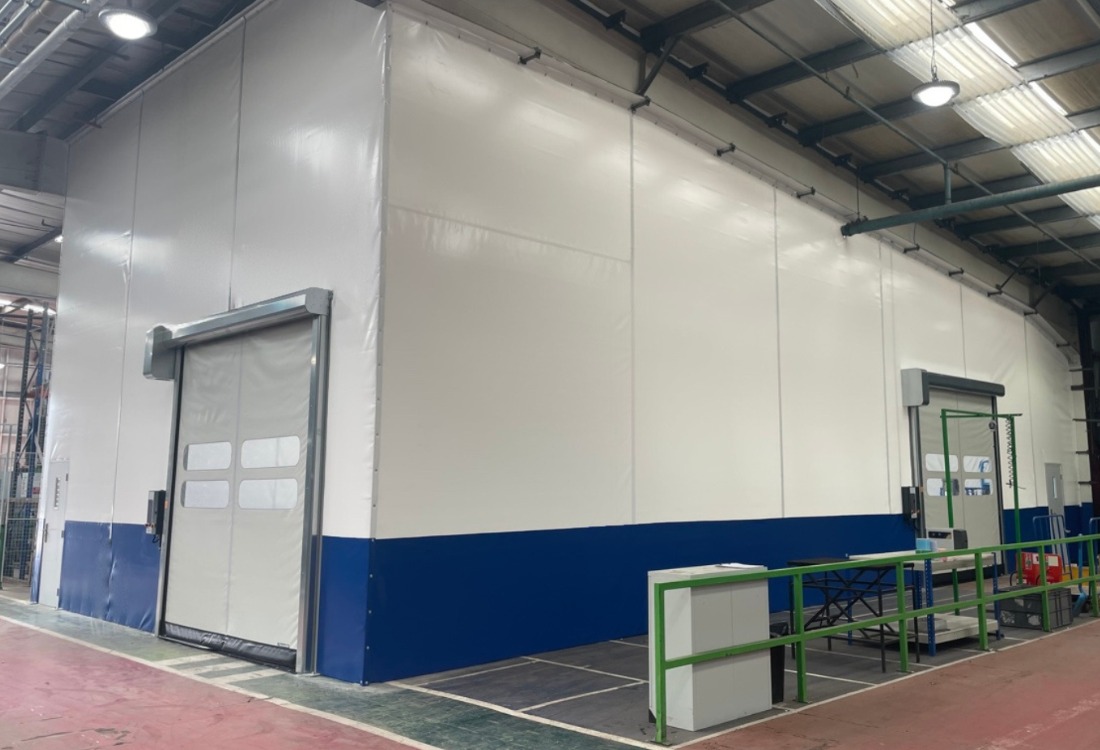
Create Allergen And Hygiene Controlled Zones With Food Grade Flexible Partitions
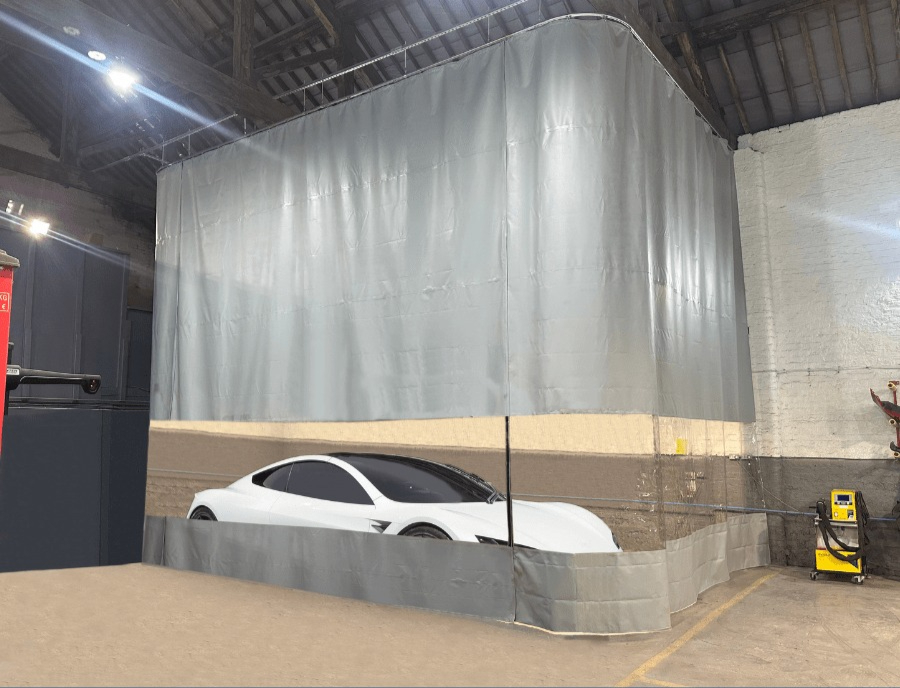
The Advantages Of Industrial Partitioning For The Automotive Industry
No Comments Yet
Let us know what you think