


By Luke Hutchinson on Oct 22, 2026, 11:00:01 AM
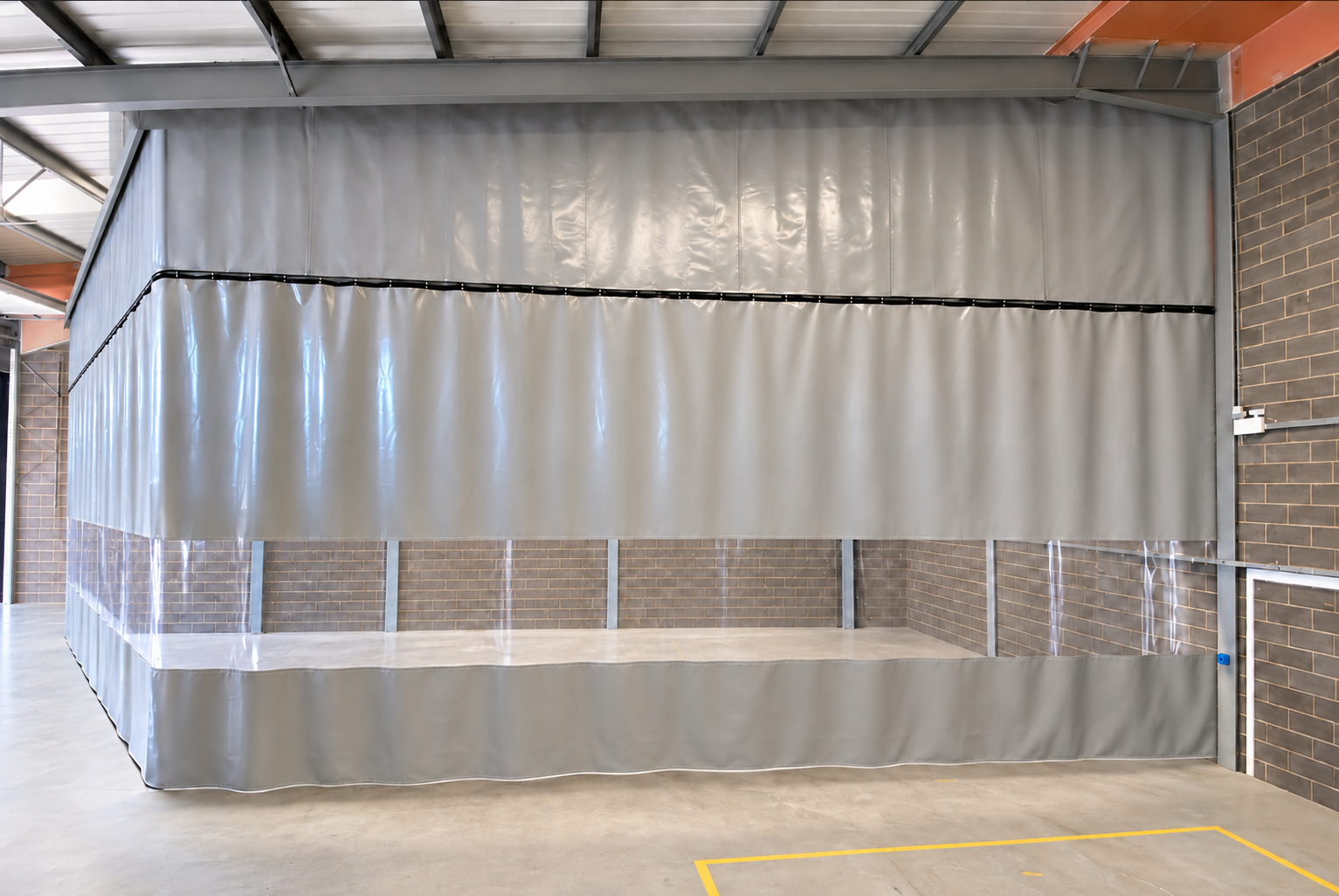
Workshop curtains are hugely useful for creating distinct areas in an industrial environment without the expense of installing permanent structures. They’re also practical too, enabling businesses to reconfigure as required when operations change or new product lines are introduced. Suitable for a vast range of industries, from food manufacturers to engineering and fabrication plants, it’s no surprise then that workshop curtains are widely used to offer flexibility in these dynamic environments.

If your site handles cleaning agents, degreasers or process chemicals anywhere near a curtain enclosure, however, it’s a fair question to ask exactly what that material can and cannot cope with. PVC is one of the most widely used materials in industrial curtains for good reason, but like any material, it has limits, and knowing where those limits sit before you specify a curtain makes far more sense than finding out afterwards.
Why PVC Is Used So Widely In Industrial Settings
PVC is naturally resistant to a wide range of common industrial substances, including many acids, alkalis, salts, oils and alcohols encountered on a typical production floor. This broad resistance, combined with its flexibility, durability and relatively low cost, is exactly why PVC has become a commonly used material for industrial curtains and general-purpose screening across manufacturing, food production and process industries.
For most everyday chemical exposure, a correctly specified PVC curtain performs reliably for years, giving manufacturers a cost-effective and efficient way of dividing up production space as and when it’s required.
Where Industrial Curtain Materials Struggle
PVC is not well suited to certain aggressive substances, including aromatic and chlorinated hydrocarbons, ketones and esters, since these can cause swelling, softening or other damage to the material over time. Common examples include solvents such as acetone and toluene.
Exposure to these substances can cause swelling, softening or other deterioration in the material over time, well before it would otherwise need replacing, which is why identifying your specific chemical environment is essential before you order chemical-resistant curtains rather than after installation.
Why Concentration And Temperature Change The Picture
How a chemical affects PVC and other materials depends heavily on concentration, temperature and exposure time, so a substance that is broadly compatible at low concentration or room temperature can behave very differently at higher strength or heat.
A chemical that causes only mild softening in dilute form and brief contact might cause serious deterioration at full strength with prolonged exposure. This is one of the main reasons you shouldn’t rely on generic product descriptions - the same chemical can sit at opposite ends of the compatibility scale depending on how it is actually used on your site.
Checking Compatibility Before You Commit
If you’re unsure whether your specific chemicals are compatible with PVC, the safest approach is to check against a recognised chemical resistance chart or request a sample for testing in your own working environment. Testing under real conditions, including the concentrations, temperatures and exposure times, gives a far more accurate picture, particularly where multiple chemicals or cleaning agents are used in the same area over time.
What This Means For Specifying Curtains
For project managers and engineers responsible for specifying industrial curtains, this means treating chemical compatibility as a core part of the specification process, not an afterthought once a supplier has already been chosen.
Useful details to confirm upfront include which chemicals will contact the curtain directly, how concentrated they are likely to be, typical exposure duration and whether temperatures in the area vary significantly during different processes or seasons. Sharing this information early gives a supplier the best chance of recommending a specification that will actually stand up in your environment.
Alternatives Where PVC Is Not Suitable
Where a site's chemical profile falls outside what standard PVC can reliably handle, alternative curtain materials or specifications are often available that better suit aggressive chemical environments. This is another reason a proper compatibility check at the specification stage pays off, since it allows a supplier to steer you toward a genuinely suitable option rather than a standard curtain that may not last in your specific setting.
Reviewing Existing Curtains On Site
If you already have industrial curtains installed and are unsure whether they were specified with your current chemical processes in mind, it makes sense to review them alongside any changes to the substances used on site. Processes change over time, new cleaning agents get introduced, and curtains originally specified for one set of conditions can end up handling a very different chemical load years later. A periodic review against your current chemical inventory helps catch this kind of mismatch before it shows up as premature wear or damage.
Getting The Right Specification For Your Environment
Hutchinson's PVC Solutions can help you identify the right workshop curtains specification for your chemical environment, working from the actual substances, concentrations and conditions present on your site rather than general assumptions.
Request a quote, and we'll work through your specific requirements to find a curtain specification that matches your site-specific needs.
No Comments Yet
Let us know what you think