.png?width=240&height=72&name=Untitled%20design%20(22).png "Untitled design (22)")


By Luke Hutchinson on Sep 10, 2026, 11:00:01 AM
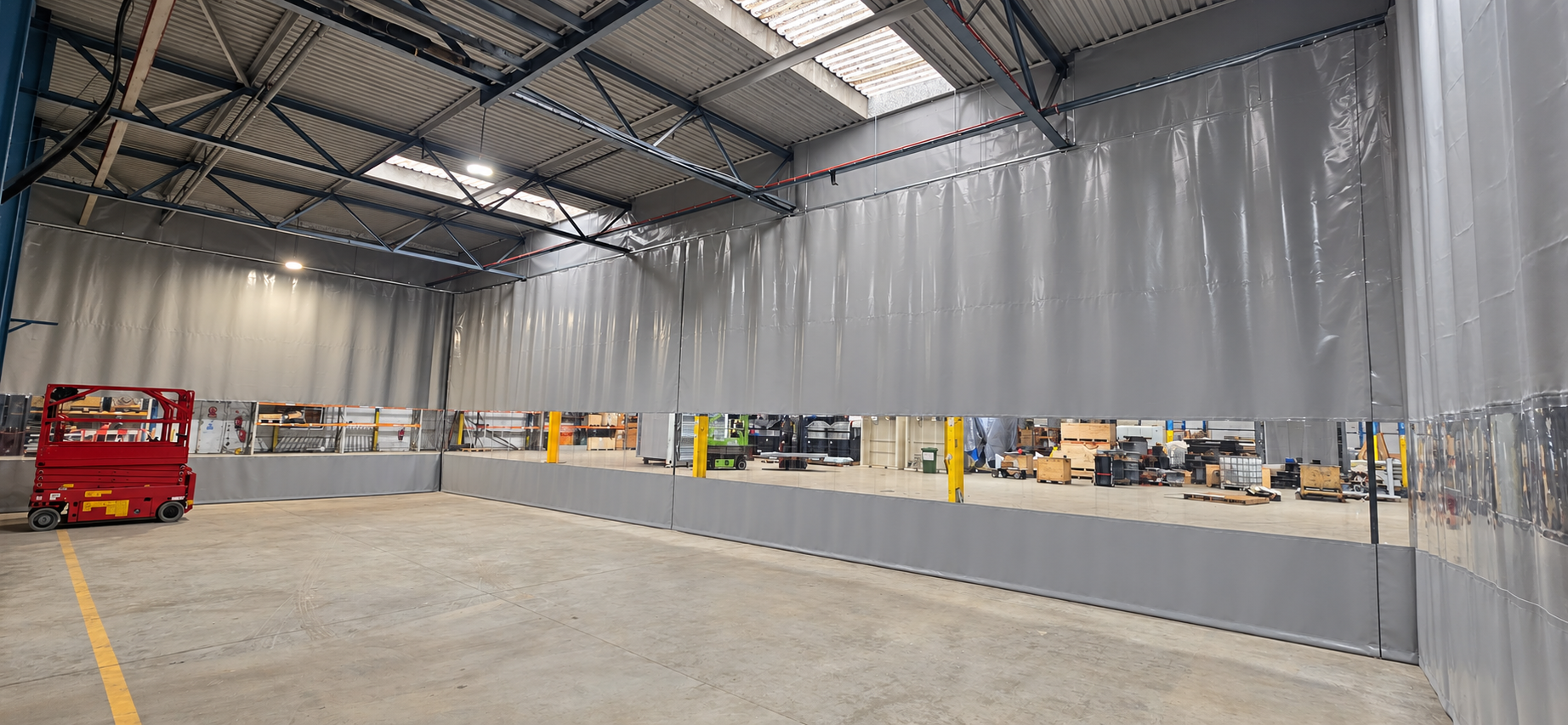
Industrial workshop curtains are built to handle demanding environments, but like any piece of equipment, they last longer and perform better with a proper maintenance routine. For food factory engineering managers balancing hygiene standards with busy production schedules, knowing exactly what routine cleaning should involve, and what to avoid, makes a real difference to how long curtains stay effective.

Here’s what you need to know.
A Simple Cleaning Routine Is Usually Enough
A simple wipe down with warm water and mild detergent on a regular schedule is usually enough to keep workshop curtains clear and clean. There is no need for complicated cleaning products or specialist equipment for most everyday dirt and grime. Setting a consistent schedule, rather than cleaning only when curtains look visibly dirty, helps maintain both hygiene standards and the clarity of the material over time, which is particularly important in food production environments where visibility through the curtain plays a role in day-to-day safety. It also saves your staff’s energy during the rigours of cleaning because it’s far easier to clean mildly dirty curtains regularly than it is to have to scrub heavily soiled ones sporadically.
Products And Methods To Avoid
Strong solvents and abrasive cleaning products should be avoided on workshop curtains, since these can break down the material faster than normal wear and tear and shorten the curtain's working life. Ketone-based solvents and aromatic solvents in particular can attack PVC, causing it to soften, discolour or become brittle over time.
Abrasive pads and scourers can also scratch the surface, creating small imperfections where dirt and bacteria can accumulate, which is especially relevant in food factory settings where surface hygiene is closely monitored.
What To Check For During Inspections
Industrial workshop curtains should be checked periodically for tears, cracking or stiffness at the fixing points, particularly in areas with heavy foot or forklift traffic. These high-traffic zones tend to show wear first, since repeated contact and movement put more strain on both the material and the points where it attaches to the track. Catching small tears or early signs of cracking during a routine check allows for a simple strip replacement rather than a full curtain replacement further down the line, which is generally far more cost-effective.
Do Not Overlook The Hardware
Hardware such as tracks, hooks and fixings should be inspected alongside the curtain material itself, because a curtain in good condition can still cause problems if the tracks or runners are worn or misaligned. A curtain that does not hang or move correctly, even if the strips themselves are undamaged, can create gaps that let temperature, dust or contaminants through, which defeats much of the purpose of having the curtain installed in the first place.
You should regularly check the full system, not just the visible PVC strips, to help keep PVC strip curtain maintenance effective over the long term.
Building A Sustainable Maintenance Schedule
The right frequency for cleaning and inspection depends on how the curtain is used. A busy food production line with constant forklift traffic needs far more frequent attention than a curtain fitted to a rarely used storeroom, and building this into a planned schedule, rather than relying on staff to notice problems as they arise, tends to catch issues far earlier.
A written checklist, reviewed regularly, also makes it easier to spot patterns, such as one particular doorway wearing out strips faster than the rest of the site. It also helps keep you compliant in industries where this is essential, such as food production.
Getting The Right Maintenance Routine For Your Curtains
Every workshop is different, and the right maintenance schedule depends on factors such as foot traffic, temperature and the specific demands of a food production environment. Hutchinson's PVC Solutions can advise on the right maintenance routine for your specific curtain type and usage, helping you build a simple, sustainable schedule for industrial curtain cleaning that keeps your curtains performing as they should.
Why This Counts More In Food Factory Environments
For food factory engineering managers, curtain condition is not only a maintenance issue but also a hygiene and compliance one. Torn or heavily worn strips can create gaps where pests, dust or contaminants pass through, which is a particular concern around production and packing areas subject to regular audits.
Building curtain checks into existing hygiene inspection routines, rather than treating them as a separate task, is often the simplest way to make sure they do not get overlooked between larger equipment reviews.
If you would like advice on maintaining your industrial workshop curtains, request a quote to find out more about the right routine for your site.

.png)
How Workshop Curtains Help Isolate Work Areas Without Costly Downtime
How A Retractable Spray Booth Saves Floor Space In A Small Workshop
No Comments Yet
Let us know what you think