.png?width=240&height=72&name=Untitled%20design%20(22).png "Untitled design (22)")


By Luke Hutchinson on Oct 15, 2026, 11:00:01 AM
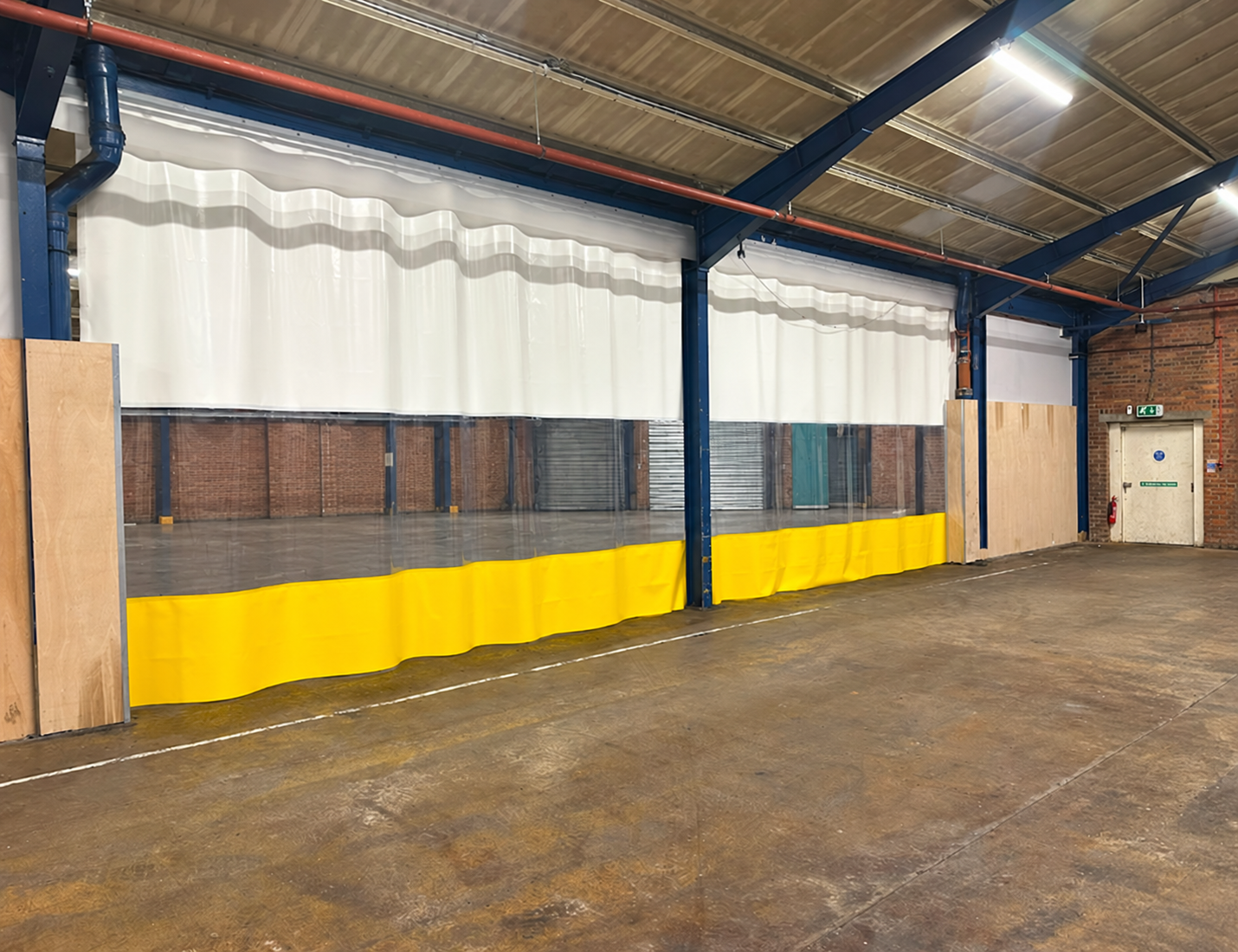
When you rent warehouse space, it’s common to wonder how much you can reorganise it to make it work for your business. Ultimately, it depends on your lease terms, but in most cases, it is possible to make alterations.

Non-structural options like warehouse partitions walls are usually far easier to get approved than permanent construction, and they come with far fewer complications when the lease eventually ends. Because this type of walling can be supported from existing steelwork, simply fixed to the floor and removed again if required, it can be particularly well suited to rented industrial buildings.
What Your Lease Says About Alterations
Most commercial leases draw a clear line between structural alterations and works that leave the building's structure and exterior untouched. Structural changes such as knocking through walls or altering the roof are rarely permitted without extensive negotiation, while non-structural internal changes are often allowed, particularly with the landlord's written consent. You will also likely have clauses in place that require you to return the building in the condition in which you rented it when the lease ends, which means removing permanent or semi-permanent structures unless the landlord consents to the changes remaining.
It is still sensible to check the alterations provisions in your lease before work begins, but a removable, non-structural partition is generally a much simpler proposition than making permanent changes to the building.
Can A Landlord Refuse Consent?
Whether landlord consent is required will depend on the terms of your particular lease. However, warehouse partition walls can be considerably easier to accommodate than permanent alterations because they do not require structural changes to the building and can be removed again when the tenancy ends.
If you are unsure, a conversation with your landlord before installation is a sensible precaution and can usually clarify what, if anything, they need from you.
Why Demountable Partitions Are Easier To Approve
This is where demountable warehouse partitions have a clear advantage over permanent construction. Because warehouse partition walls are non-structural and do not alter the building's fabric, they tend to be viewed far more favourably by landlords than block or stud walls. They can typically be removed at the end of the lease without leaving structural damage behind, which addresses one of the biggest concerns landlords have when granting consent, namely reinstatement obligations. If you submit a proposal for a demountable system, rather than a permanent build, you’re often putting forward a request that is simpler for a landlord to say yes to.
For businesses researching demountable partitions UK-wide, this flexibility is often one of their biggest advantages when adapting rented warehouse or industrial space.
Getting Written Confirmation Before You Start
If your lease requires consent for internal alterations, getting this confirmed before installation gives both you and your landlord clarity. In many cases, the fact that the partition makes no structural change and can be removed at the end of the tenancy can make that conversation relatively straightforward.
Support From Hutchinson's PVC Solutions
Hutchinson's PVC Solutions has experience installing flexible partitioning in rented units across a range of industries and can talk through what is realistic for your space before you approach your landlord. In their experience, landlords have not refused this type of walling because it can be hung from existing steelwork, simply fixed to the floor and removed again when required. Getting a clear picture of what the finished partition will look like, and how it will be installed and removed, can make it much easier to put together a proposal your landlord is likely to approve.
Planning For The End Of Your Lease
One of the practical benefits of demountable warehouse partition walls is that they can be removed when you leave the building. This means you can adapt the warehouse for your current operational needs while still having the option to return the space to its previous layout at the end of the lease.
What Landlords Really Want To See
Most landlords want to work with business tenants and are not looking for reasons to refuse a sensible request. What they usually want is reassurance that the work will be carried out to a reasonable standard, that it will not affect the building's structure or services and that the space can be returned to its original condition if required.
A clear proposal showing that a partition is demountable, professionally installed and fully removable at the end of the lease tends to answer most of these concerns before a landlord even needs to ask.
If you are planning to divide up a rented warehouse or industrial unit, request a quote to get started and find out how a flexible partition wall could work in your space.
No Comments Yet
Let us know what you think