.png?width=240&height=72&name=Untitled%20design%20(22).png "Untitled design (22)")


By Luke Hutchinson on Jul 23, 2026, 11:00:00 AM
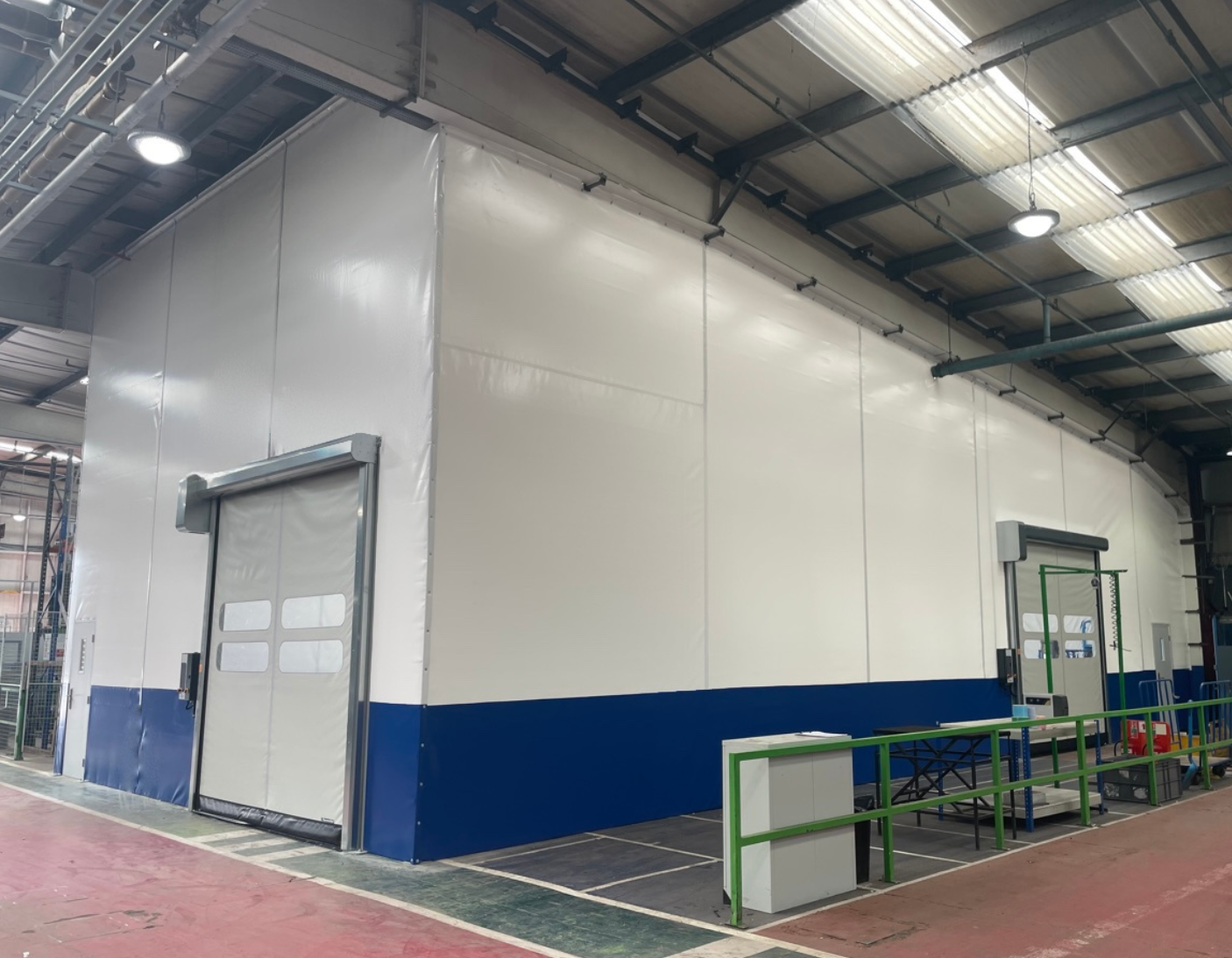
Dust is a normal by-product of the manufacturing process and is often treated as something unavoidable, which you manage as you go. But from a health and safety perspective, dust is a serious issue, and one that is tightly regulated.

If you’ve had an internal risk assessment, a near miss or an HSE inspection flag airborne dust, you’ll already know that merely keeping an eye on the issue isn’t enough. You need a clear, practical solution that brings your operation into compliance without disrupting production.
Industrial curtains and dividers provide a cost-effective and compliant solution, ensuring strict separation in the operational areas you need it most.
What The Regulations Actually Require
In the UK, airborne dust is governed primarily by COSHH (Control of Substances Hazardous to Health) and EH40 workplace exposure limits.
In simple terms, this means:
- You must assess the risk of dust exposure
- You must control or reduce that exposure where possible
- You must ensure workers are not exposed above defined limits
EH40 sets out specific exposure limits for different substances, while COSHH requires you to actively manage how those risks are controlled within your workplace. The key point is if dust is being generated and allowed to spread across your facility, you are likely not meeting compliance requirements.
Why Dust Is So Hard To Control
In large, open manufacturing spaces, dust doesn’t stay where it’s created - it travels. Air movement from machinery, ventilation systems and general activity allows particles to move freely across the facility. What starts in one production area can quickly affect adjacent zones, storage areas or even packing and dispatch.
That creates two problems:
- It increases the risk of exposure across a wider group of employees.
- It makes it much harder to demonstrate that you have effective control measures in place.
Without physical separation, dust containment becomes reactive rather than controlled and your ability to stay compliant is reduced.
The Problem With Permanent Solutions
When dust becomes a compliance issue, the instinct is often to look at permanent structural solutions such as building walls, creating enclosed rooms or installing fixed barriers.
.While these can prove very effective, they come with significant drawbacks. First off. They’re expensive. They also take time to install. And in most cases, they require some level of disruption to production.
For many businesses, shutting down operations to install permanent structures simply isn’t an option. This is where flexible systems offer a more practical alternative.
Containment Without Disruption
Industrial partition curtains provide a way to physically contain dust at the source without the need for major construction work. These robust, flexible barriers, which are often made from heavy-duty PVC or vinyl, are designed to withstand the rigours of an industrial environment.
By creating defined zones around dust-generating processes, they prevent particles from spreading into the wider facility. This allows you to isolate high-risk areas while maintaining normal operations elsewhere.
Additionally, because these systems are flexible, they can be installed quickly and adapted to suit your layout. There’s no need for lengthy build projects or full shutdowns. Installation can often be carried out around live production, minimising disruption and keeping output on track.
Supporting Compliance In Practice
From a compliance perspective, the key is demonstrating control. Partition systems support this by:
- Creating clear separation between dust-generating processes and other areas
- Reducing the spread of airborne particles across the facility
- Supporting COSHH assessments by defining contained zones
- Helping maintain exposure levels within acceptable limits
Fire Safety And Material Standards
In environments where dust is present, fire safety is also a consideration. Depending on the type of dust involved, materials used in containment systems may need to meet specific flame retardancy standards.
High-quality Industrial curtains and dividers are designed with this in mind, offering options that meet relevant safety requirements while still providing the flexibility needed for operational use.
A More Efficient Way To Stay Compliant
The reality for most manufacturing businesses is that compliance needs to be achieved alongside production, not instead of it. Solutions that require downtime or major structural changes can create more problems than they solve while flexible partition systems offer a more balanced approach.
They allow you to respond quickly to compliance requirements, improve safety conditions for your team, and maintain productivity at the same time.
Take Control Of Dust Without Stopping Production
If dust has been flagged as a risk in your facility, acting sooner rather than later is key.
Waiting until an issue escalates, or until enforcement action is taken, can be far more disruptive and costly than addressing it proactively.
Industrial partition curtains provide a practical, compliant solution that can be implemented quickly and adapted as your operation evolves.
Need to meet HSE dust control requirements without halting production? Our partition systems provide compliant containment, installed rapidly around live operations. Speak to our team today.
How A Retractable Spray Booth Saves Floor Space In A Small Workshop
Case Study: Preventing Cross Contamination And Building A Safer More Flexible Workspace For Harrison Spinks
No Comments Yet
Let us know what you think