


By Heidi Croson on Nov 18, 2026, 8:45:01 AM
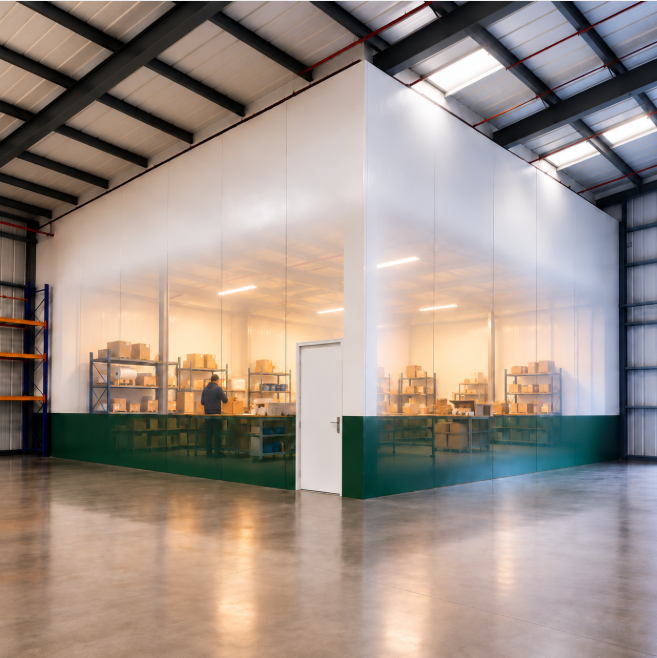
Heating a large warehouse or factory can be challenging, particularly when only certain areas are occupied throughout the day.
High ceilings, large open floor spaces and frequently opened roller shutter doors can all make temperature control more difficult. In many cases, businesses may also be heating large storage areas or sections of the building that are rarely used.
Creating smaller heated zones with a warehouse partition or industrial curtains can help divide large spaces into more manageable working areas. This lets businesses focus heating where it's needed while keeping the rest of the warehouse operational.
Why Create Smaller Heated Zones?
Not every area of a warehouse or factory needs to be maintained at the same temperature.
A production area, packing station, or assembly zone may be occupied throughout the day, while nearby storage space may be accessed only occasionally. Some manufacturing processes may also require a more stable temperature than the surrounding factory floor.
Installing a warehouse partitioning system can help separate these different areas.
By creating smaller zones, businesses can concentrate heating in occupied or temperature-sensitive areas rather than trying to heat a single large open space.
A factory partition can also reduce cold-air movement between areas of a building and create a more comfortable working environment during the winter months.
1. Identify Which Areas Actually Need Heating
Before installing a warehouse partition or a sliding curtain, consider how your space is currently being used.
Look at:
- Where employees spend most of their working day
- Which areas are primarily used for storage
- Where temperature-sensitive machinery or processes are located
- How frequently external doors are opened
- Which parts of the warehouse are regularly left empty
- Where cold draughts are most noticeable
Understanding how the space is used can help you identify where a factory partition or workshop curtain could provide the greatest benefit.
2. Separate Working Areas From Storage and Unused Space
Large warehouses and factories are often designed as open-plan spaces. While this can make it easier to move machinery, materials and vehicles around the site, it can also make temperature control more difficult.
A warehouse partition can divide a large building into smaller working zones without the need to construct permanent walls.
This allows the business to focus heating on the areas where employees are working rather than heating the entire warehouse to the same temperature.
3. Choose the Right Warehouse Partitioning Solution
The best type of partition will depend on how your building operates and how permanent the separation needs to be.
Tension Wall
A Tension Wall is a strong option for businesses looking to create a more defined divide in their space.
Tension Walls are designed to suit the height and layout of an existing building and can create separate production, storage or working areas within a large factory or warehouse.
They can also be manufactured to accommodate existing machinery, steelwork, and access requirements, making them suitable for complex industrial environments.
Slida-curtain
For areas that require more flexibility, a Slida-curtain can provide a practical alternative.
A Slida-curtain can act as a flexible workshop curtain or warehouse divider, allowing an area to be opened up when required and closed off when separation is needed.
This can be particularly useful in workshops, manufacturing facilities and warehouses where layouts or operational requirements change regularly.
4. Think About Vehicle and Personnel Access
A warehouse partition should improve how your space functions, not create unnecessary obstacles.
Forklifts, employees, equipment and materials may still need to travel between different areas of the building throughout the day.
A bespoke partitioning system can incorporate different access options, including:
- Personnel doors
- Roller shutter doors
- High-speed doors
- Vehicle access points
Considering access at the design stage allows you to maintain operational flow while still creating clearly defined heated zones.
5. Reduce the Impact of Cold Air and Draughts
One of the biggest challenges in a warehouse during winter is cold air entering through large external doors.
Roller shutter doors are often opened regularly for deliveries, forklifts and loading operations. Each time the door opens, cold air can quickly move into the surrounding workspace.
Installing a warehouse partition or a sliding curtain can help separate occupied areas from these high-traffic entrances.
6. Avoid Heating Space You Are Not Using
In a large warehouse, it may not be practical or necessary to heat every square metre to the same temperature.
Storage areas, unused floor space, and low-traffic sections may require less heating than areas where employees work throughout the day.
Creating separate zones with a factory partition or industrial curtain allows you to manage different parts of the building more effectively.
Instead of treating the warehouse as a single environment, partitioning it can create smaller spaces with distinct purposes and heating requirements.
Partitions for All Year Round
Warehouse partitioning can be useful year-round, but it becomes particularly valuable during the colder months.
A Tension Wall can create a substantial divide between different areas of a building, while a Slidacurtain provides a more flexible solution that can be opened and closed when required.
These solutions can help businesses:
- Create smaller heated working zones
- Separate occupied and unoccupied spaces
- Improve temperature control
- Reduce cold draughts
- Segregate different production processes
- Maintain access for people and vehicles
- Avoid permanent building work
Create a More Practical Warehouse This Winter
Creating smaller heated zones doesn't necessarily mean building permanent rooms inside your warehouse or factory.
A bespoke factory partitioning system or a sliding industrial curtain can help divide a large open space into smaller, more manageable working areas.
At Hutchinson's PVC Solutions, we design, manufacture, and install bespoke partitioning solutions for factories, warehouses, and workshops, including our Tension Walls and Slida-curtain industrial curtains.
Every system can be designed around the existing layout of your building, including machinery, steelwork, personnel access and vehicle routes.
If you are looking to create smaller heated zones, improve temperature control or divide a large warehouse this winter, speak to our team about the most suitable warehouse partitioning solution for your space.
No Comments Yet
Let us know what you think